Introduction
Close Quarter Battle (CQB), also commonly referred to as Close Quarters Combat (CQC), encompasses the tactics, techniques, and procedures used to operate and fight in confined and complex environments—rooms, hallways, stairwells, vehicles, and built-up urban spaces. CQB is more than simply short-range shooting; it is an integrated discipline combining tactical movement, angle control, rapid decision-making, team communication, medical response, and psychological resilience. This article explores what CQB entails, why training in CQB is valuable, the concrete skills one acquires, and how those skills apply across professional and civilian contexts.

What does CQB actually mean?
CQB describes engagements and operations in constrained spaces where proximity to threats, physical obstacles, and teammates demands specialized techniques. Key components include:
Angle and sector control.
Room entry and clearing procedures.
Use of cover and concealment in tight spaces.
Integrating shooting, movement, and communications without compromising team safety.
Tactical casualty care and immediate medical response.

Who should consider CQB training?
CQB is beneficial for a wide range of professionals and responsible civilians:
Special police and counter-terrorism units.
Executive protection and close protection officers.
Private military contractors and security firms.
Security officers for critical infrastructure.
Well-prepared armed civilians where legally permitted.

Why CQB skills matter
Safety and control in confined environments — Operations inside buildings are inherently hazardous; CQB techniques minimize risks to teams and non-combatants.
Rapid decision-making under stress — CQB training conditions students to make effective decisions when information is limited and time is short.
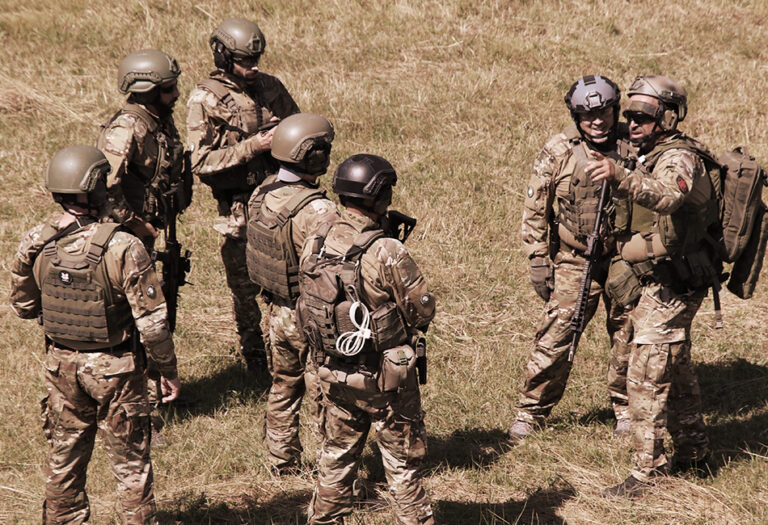
Team coordination — Effective CQB depends on precise roles and synchronization: stack, entry, breacher, cover, etc.
Survivability and medical response — Tactical medicine skills allow teams to stabilize casualties until evacuation is possible.
Real-world applicability — Urban incidents, active shooter events, and other crises often require these capabilities.


Core elements of good CQB training
Theory and concepts — Rules of engagement, weapon handling discipline, standard entry procedures, principles of movement in constrained spaces.
Shooting fundamentals — Rapid target acquisition, target prioritization, shooting from off-shoulder positions, shooting while moving, and shooting from behind cover.
Tactical movement and maneuvers — Stacking, entry formations, dynamic and deliberate entry techniques, stairwell tactics.
Communication — Verbal and non-verbal commands, radio discipline, hand signals, timing and sequencing.
Tactical casualty care — TCCC/TECC principles for bleeding control and rapid stabilization. (Tactical Medicine Course)
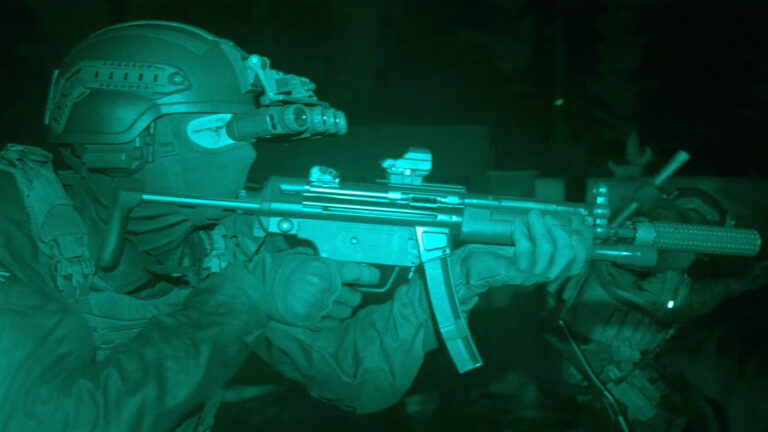
Low-light and no-light operations — Use of lights, IR/NVG techniques, and sensory adaptation.
Stress inoculation and realistic scenarios — Training under noise, smoke, time pressure, and simulated casualties.
Legal and ethical frameworks — Use of force considerations, minimizing collateral damage, operating within lawful boundaries.

Specific skills gained by participants
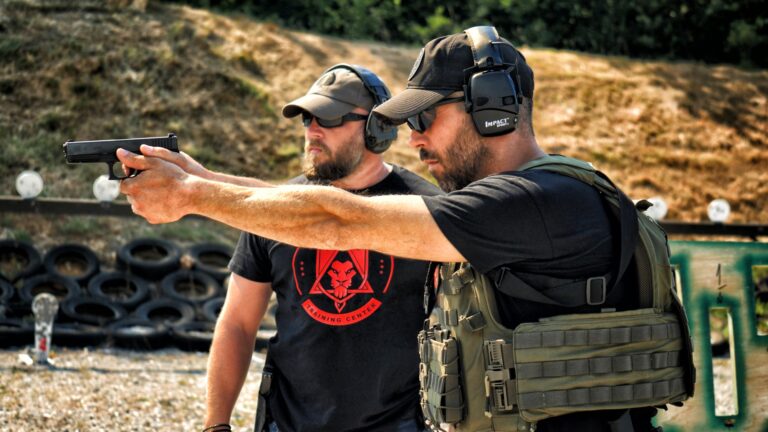
Safe weapon manipulation: muzzle control, rapid reloading, transition between weapons, muzzle discipline in close quarters.
Room clearing: single-room, stack-based, and team-based room clearing techniques with role assignments.
Breaching skills: mechanical and procedural methods for creating entry points when required.
Tactical communications: concise, disciplined radio and hand-signal protocols.
Threat recognition and prioritization: quick assessment and plan adjustment.
Tactical medicine: hemorrhage control, airway management basics, casualty extraction considerations.
Use of specialized gear: NVGs, weapon-mounted lights, body armor, and hearing protection.
Psychological resilience: stress management, leadership under pressure, maintaining situational awareness.

Practical benefits beyond combat
Improved personal safety — Environmental awareness and risk avoidance are valuable in everyday life.
Career opportunities — Skills are applicable to roles in security, law enforcement support, risk management, and private contracting.
Physical and mental conditioning — Enhanced fitness, discipline, and cognitive resilience.
Stronger teamwork and leadership — Techniques that transfer to many organizational scenarios.

Risks and ethical considerations
CQB training carries inherent responsibilities:
Training with weapons and breaching tools demands controlled environments, qualified instructors, and strict safety protocols.
Misapplication of techniques in civil contexts can lead to legal and moral consequences.
Use of force must always be proportionate and justified.
Medical preparedness is essential; training without medical contingency planning is irresponsible.

How to prepare before a CQB course
Physical conditioning: cardio, strength, and mobility work to handle equipment and dynamic movements.
Basic firearms competency: comfort and safety with personal weapons where applicable and legal.
Mental preparation: stress-management and adaptability training.
First-aid skills: basics of bleeding control and emergency stabilization.
Legal knowledge: understand local laws and rules of engagement related to defensive force.

Frequently Asked Questions (FAQ)
Q: Is CQB only for military and police?
A: No. While developed for specialized units, many CQB elements are relevant to corporate security teams, executive protection, and legally-armed civilians.
Q: How long does it take to learn CQB?
A: Foundations can be taught in a multi-day intensive course, but mastery requires ongoing practice, scenario training, and recurrent refreshers.
Q: Do I need firearms experience before attending?
A: Basic weapon handling skills are strongly recommended and often required for advanced CQB training. Introductory modules may be available for novices in some programs.
Q: What safety standards are in place during training?
A: Strict safety protocols include controlled live-fire ranges, mock-rooms for force-on-force, protective gear, medical support, and experienced instructors.
Conclusion
Close Quarter Battle is a multifaceted discipline blending tactics, marksmanship, medical response, and psychological preparedness. Whether the goal is professional development within security services or improving individual situational awareness and safety, methodical and responsible CQB training provides practical, high-value skills for operating in the most challenging and dynamic environments.