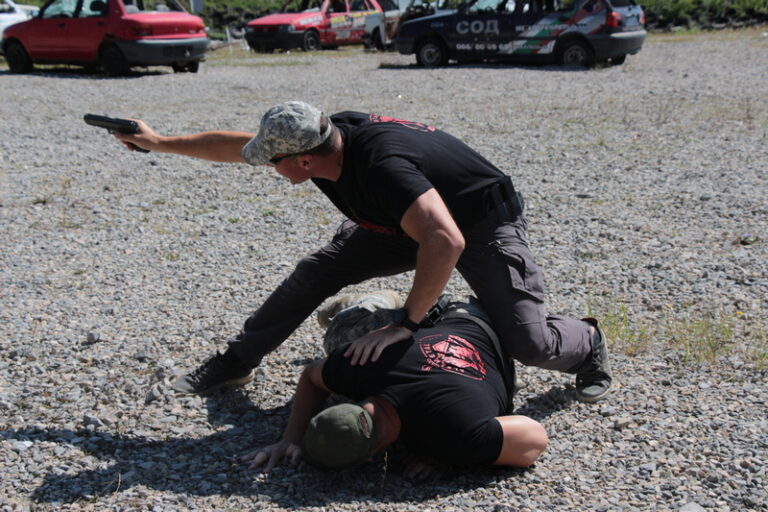
From the Shooting Range to a Real-World Situation: Why Good Shooting Skills Are Not Enough
Accurate shooting is only the beginning. Discover why real tactical training also involves observation, decision-making, movement, communication, first aid and the ability to perform under stress.
The target is at a known distance. You know where it is. You know when the exercise begins. Your firearm is ready. The instructor is watching. The environment is controlled.
Shot. Hit.
That is an important result. But in a real-world situation, almost none of these conditions are guaranteed.
It may be dark. There may be people around you. You may not know where the danger is coming from – or even whether there is an immediate threat at all. You may need to protect another person, provide first aid, leave the area, communicate with a team or simply understand within seconds what is actually happening.
And then a much more important question arises:
Not “Can I shoot?”, but “Can I make the right decision when the situation no longer resembles a shooting range?”
This is precisely the line that separates shooting ability from comprehensive professional training.
The Shooting Range Is the Beginning, Not the Final Goal
Good firearms training is fundamental.
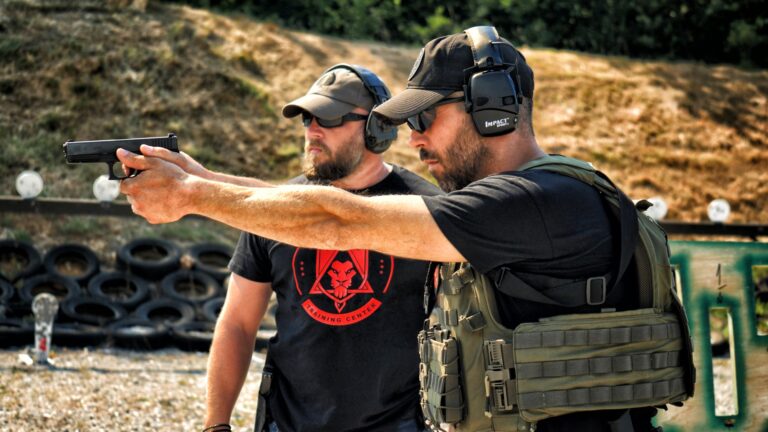
It develops safe firearms handling, correct habits, control, accuracy and confidence. Without this foundation, there is little sense in progressing to more complex exercises.
At the shooting range, you learn to control the firearm.
The next step is learning to control yourself and your own decisions when the environment is no longer predictable.
That is why professional training should be progressive.
First comes safety. Then technique. Then consistency and repeatability. Only after that should movement, limited visibility, communication, time pressure, physical exertion, different environments and decision-making be introduced.
The goal is not to make the training look impressive.
The goal is for your skills to remain reliable when conditions become more difficult.
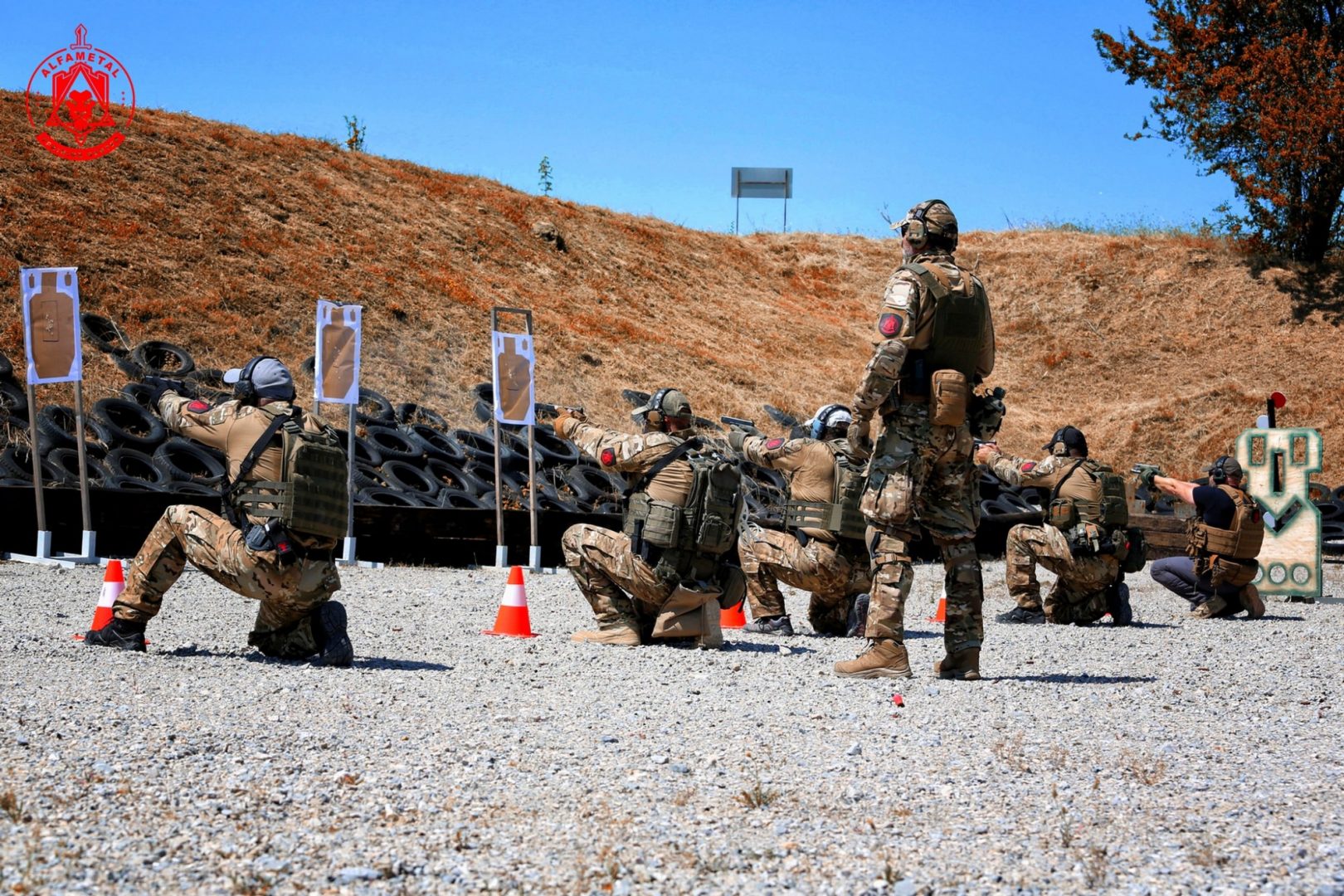
In the Real World, the Target Does Not Tell You What Decision to Make
One of the greatest differences between a standard exercise and a real-world situation is that, during training, the task is usually known in advance.
At the shooting range, you normally know what you are expected to do.
In the real world, you first have to understand what is happening.
Imagine a security professional who hears a loud noise inside a building. It could be an accident, a technical failure, a conflict between people or a genuine threat.
Imagine a close protection operator at a public event. Someone suddenly approaches the protected person at speed. It could be an aggressive individual, a journalist, an enthusiastic member of the public or a member of staff trying to communicate important information.
The correct response in these situations does not begin with the firearm.
It begins with observation, assessment and decision-making.
Professionalism is measured not only by how quickly someone can react, but also by whether they can recognise when a particular reaction is actually necessary.
Accuracy Matters. The Decision Matters Even More.
In a standard shooting exercise, the target has already been identified.
In a real-world environment, the operator must first distinguish an actual threat from a person who presents no danger.
That changes everything.
An unclear object in someone’s hand is not automatically a weapon. A person who is running is not automatically an attacker. A loud noise does not necessarily mean an attack.
Professional training should therefore develop not only the technical ability to act, but also the ability to exercise controlled restraint when the situation does not require intervention.
Sometimes the most professional decision is not to escalate the situation.
That is difficult to measure through hits on a paper target, but it is extremely important outside the shooting range.
Stress Changes the Way We Perform
When a person is under pressure, a situation is no longer perceived in the same way as during a calm training exercise.
Attention may narrow. Fine motor actions may become more difficult. Communication may deteriorate. A person may miss information that would have been immediately noticed under normal conditions.
This is why skills need to be developed progressively and practised repeatedly.
The purpose of professional training is not to teach someone to “feel no stress”. That is unrealistic.
The objective is to maintain enough control to continue observing, thinking, communicating and making decisions despite the pressure.

The Real World Is Not an Empty Shooting Range
In a real-world situation, there are almost always additional factors.
Other people. Vehicles. Doors. Stairs. Confined spaces. Poor lighting. Noise. Smoke. An unfamiliar building. Slippery surfaces. Limited visibility. Panic.
Even a relatively simple task can change completely when the environment becomes more complex.
Scenario: An Incident in a Hotel or Public Building
Imagine a security professional responding to a report of a serious incident in a hotel.
The corridors are full of people. Some are trying to leave, others are recording with their phones, while others do not understand what is happening. The available information is contradictory.
Accurate shooting alone solves very little in such a situation.
Communication, orientation, control of one’s own behaviour, risk assessment and the ability to operate among people who are not part of the team are all required.
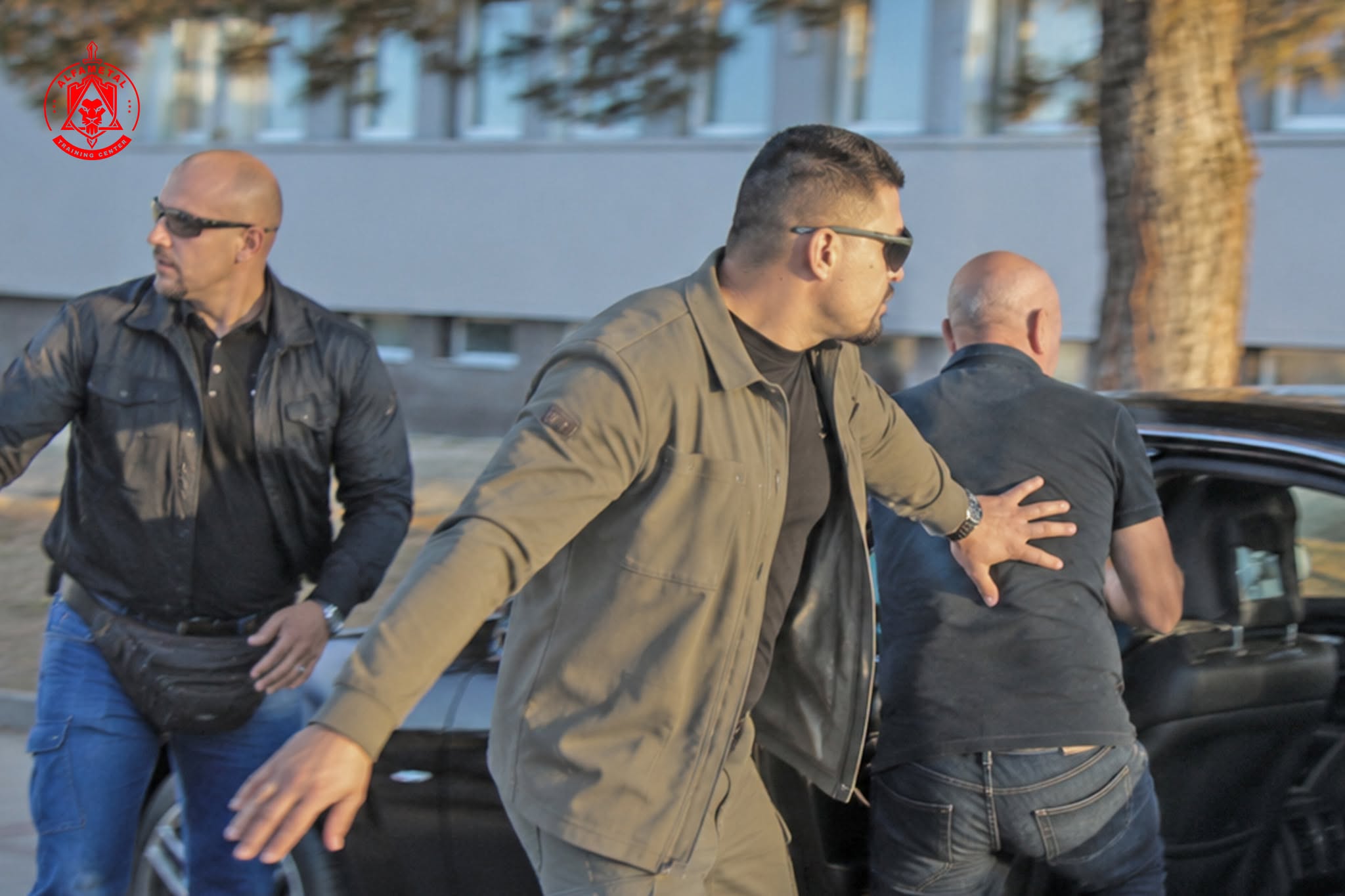
Scenario: A Problem During Vehicle Movement
For a close protection team or mobile patrol, the situation may begin not on a shooting range, but on the road.
A road traffic accident, blocked route, vehicle breakdown, aggressive crowd or sudden deterioration in the protected person’s health may require an immediate decision.
At that moment, driving, communication, advance planning, first aid or choosing a safe alternative may be far more important.
This is precisely why professional training is a system of interconnected skills rather than a collection of isolated techniques.

Movement Changes the Task
Shooting from a predetermined position allows you to concentrate on technique.
Real-world work rarely provides that level of comfort.
Sometimes you need to move. Sometimes you need to get another person out of a dangerous area. Sometimes the primary objective is simply to reach a safe location.
This is particularly important in Close Protection, where the objective is not “to win a gunfight”, but to protect the client.
That distinction is fundamental.
For a close protection professional, success may mean that the protected person has been moved to safety, the conflict has been avoided and the situation has ended without the use of force.
Internal link: Close Protection Operator Course – Level 3
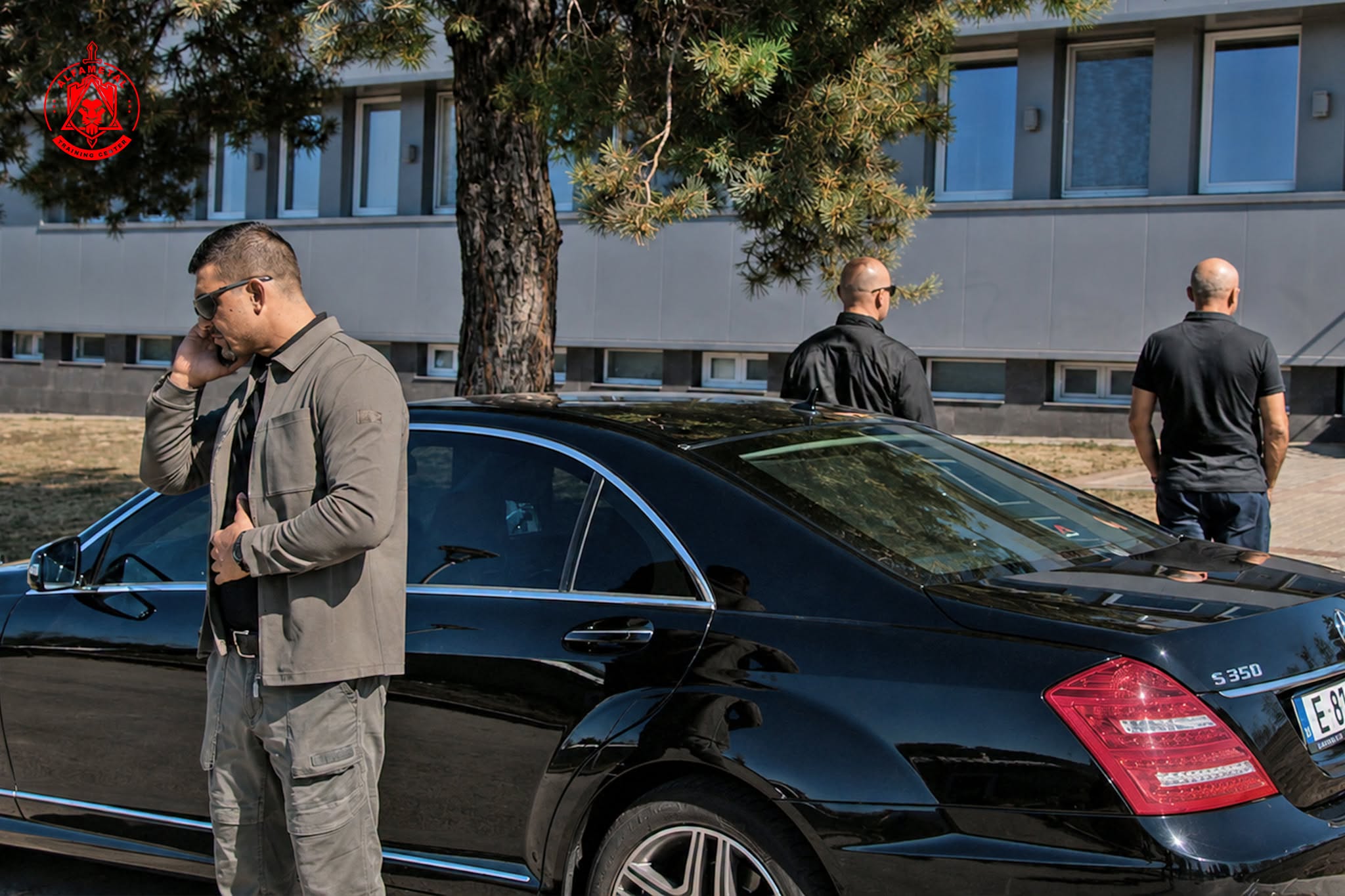
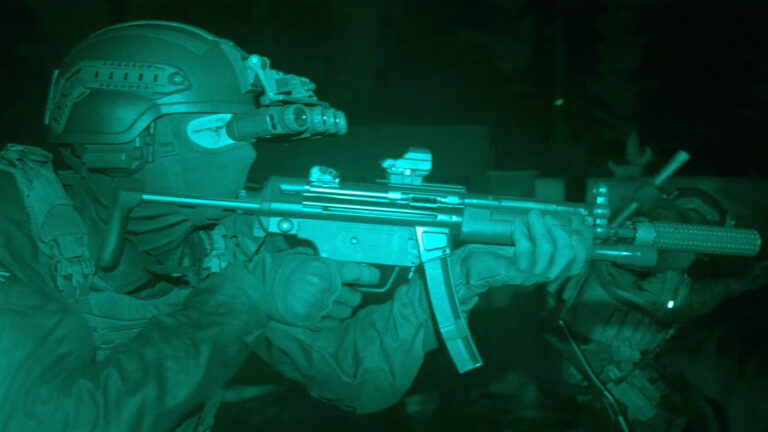
Darkness Takes Away Information
Skills that appear stable during daylight can change significantly in low-light conditions.
Distances become more difficult to judge. Shapes are recognised more slowly. Equipment becomes harder to see. Communication and orientation become even more important.
This is why Low-Light and Night Operations Training are a natural progression from fundamental firearms and tactical training.
Darkness does not necessarily create new problems.
It makes existing problems more difficult to solve.
Internal link: Night Operations – Low-Light / No-Light Training
Confined Spaces Create Different Challenges
Operating inside a building is different from working outdoors.
Space is limited. Visibility may be partial. There are doors, corridors, rooms, obstacles and people. Sound behaves differently and distances can be very short.
This is where CQB (Close Quarters Battle) training becomes relevant.
Professional CQB, however, should not be understood simply as “faster shooting at close range”. It requires spatial awareness, communication, coordination and continuous assessment of the environment.
Internal link: CQB – Close Quarters Battle Training

What If Someone Is Injured After the Incident?
This is a question that is often left outside conventional firearms training.
But in a real-world situation, the moment the immediate danger ends may only be the beginning of the next problem.
Someone is injured.
What do you do?
Whether the cause is violence, a road traffic accident, an occupational accident or another serious incident, the ability to provide appropriate first aid may prove more important than any other skill.
This is why medical training plays such an important role in professional security.
Shooting skills may never need to be used in a real-world situation.
First-aid skills may be needed anywhere.
Internal link: Tactical Medicine – Alfa-Metal

Communication Is Part of the Skill Set
An individual can control their own actions.
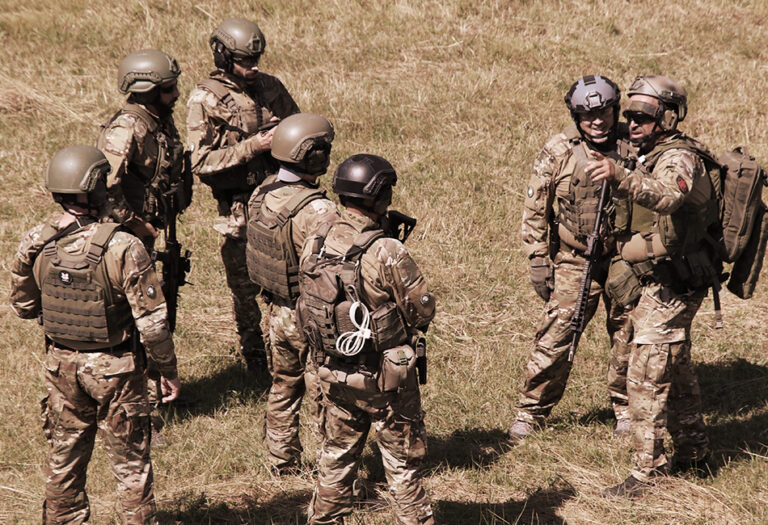
A team has to coordinate the actions of several people.
This means that a technically skilled operator must also be predictable to their colleagues. They must understand the task, receive and communicate information clearly, and recognise when their own actions could create problems for others.
In a real-world environment, poor communication can turn correct individual actions into a poor overall result.
Professional training should therefore develop not only individual skills but also teamwork.
This is particularly important in Close Protection, PSD, PMC, Mobile Patrol and other areas where tasks are normally performed as part of a team.
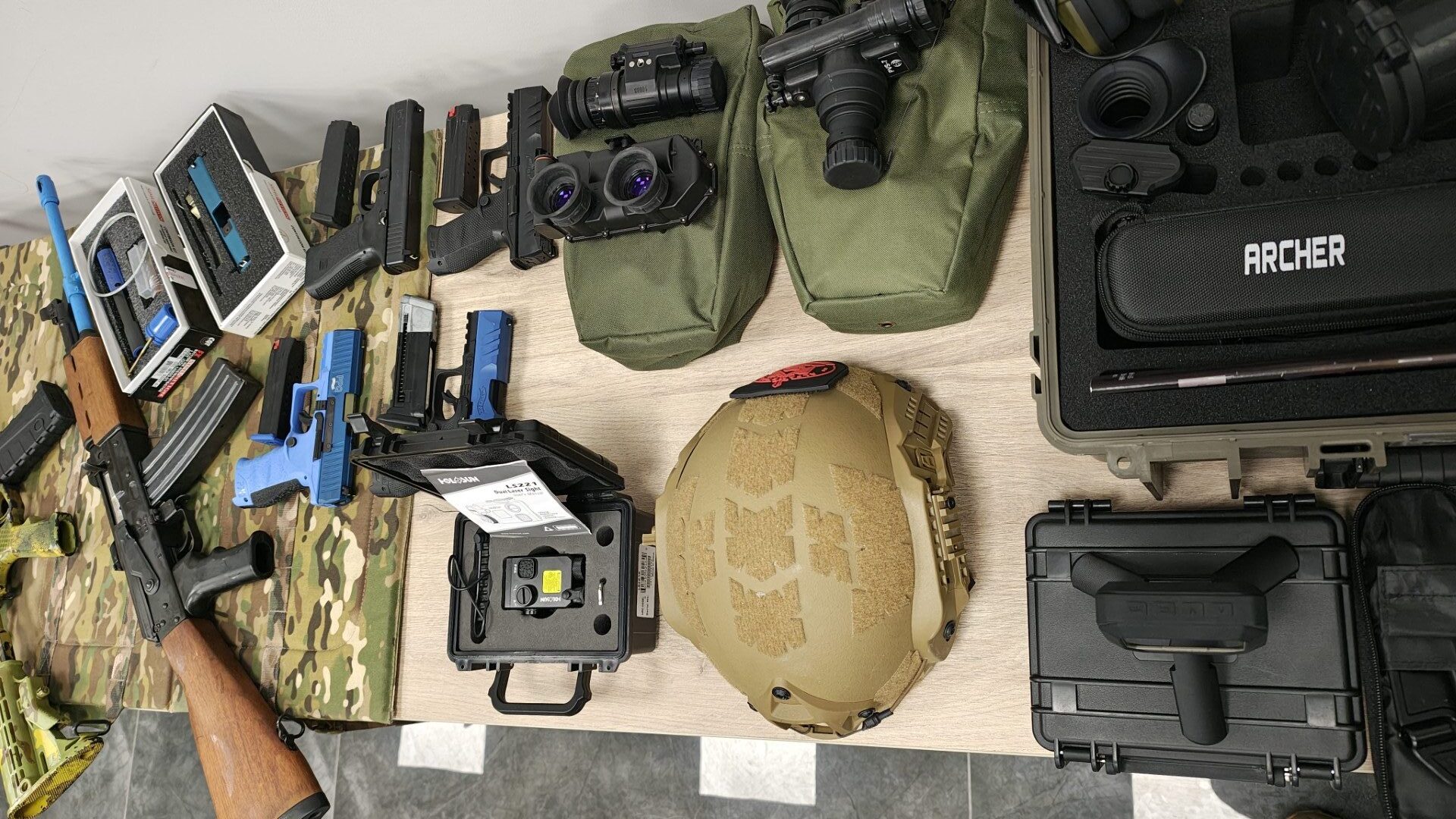
Equipment Cannot Compensate for a Lack of Training
The modern security sector offers an enormous range of equipment.
Optics. Night Vision. Thermal systems. Communication equipment. Ballistic protection. Medical equipment. Drones.
All of these can be extremely useful.
But equipment does not make decisions for the person using it.
The most expensive optic cannot identify intent. The best body armour cannot replace situational awareness. A medical kit has little value if the person carrying it does not know how to use it.
Professional preparedness begins with the person.
Equipment expands their capabilities.
Not the other way around.
Being Prepared Does Not Mean Expecting Conflict
This is an important distinction.
Professional training should not create the assumption that every situation contains a threat.
Quite the opposite.
The better prepared a professional is, the more options they have to identify a problem early, avoid unnecessary escalation and choose the most appropriate course of action.
Scenario: A Major Public Event
A concert, sporting event, conference or official meeting can bring large numbers of people together in a confined area.
The problem may be a medical emergency. A fire. Panic. A missing child. An aggressive visitor. A technical failure.
A trained professional does not interpret every incident as an armed conflict.
They recognise different risks and different possible solutions.
That is the essence of situational awareness.
Individual Skills Must Begin to Work Together
- Shooting.
- First aid.
- Driving.
- Communication.
- Observation.
- Orientation.
- Physical preparation.
- Operating in low-light conditions.
Each of these skills can be trained separately. But professional development truly begins when a person learns to use them as parts of one integrated system.
This is precisely why more advanced programmes such as Close Protection, PMC, PSD, CQB and Mobile Patrol combine different elements.
Not because a professional needs to be “an expert in everything”.
But because real-world situations rarely arrive neatly divided into training disciplines.
Training Is a Process, Not a Single Course
One of the most common mistakes is looking for a single course that will teach “everything”.
No such course exists.
Professional training is a progressive process.
For a beginner, the logical path may start with safe firearms handling and fundamental shooting skills. Tactical shooting, first aid, Low-Light, CQB and other specialised skills can then be added according to professional objectives.
For someone who already works in the security sector, the priorities may be different – Close Protection, PSD, defensive driving, Tactical Medicine or teamwork.
The best course is not necessarily the most advanced one.
It is the course that represents the right next step.
From the Shooting Range to Professional Training at Alfa-Metal
At the Alfa-Metal International Center for Special Training, firearms training forms part of a broader system of professional security and protection training.
Fundamental courses develop the core skills. Tactical programmes build upon them. Specialised training places students in more complex training environments where movement, communication, teamwork, limited visibility, medical tasks and decision-making are progressively introduced.
Suitable training areas for progressive development include:
- Basic Pistol & Carbine Course for Beginners;
- Tactical Pistol & Carbine Course;
- Night Operations – Low-Light / No-Light;
- CQB – Close Quarters Battle;
- Close Protection Operator – Level 3;
- Private Military Contractor (PMC) Course;
- PSD – Operations in High-Risk Environments;
- Mobile Patrol and Defensive Driving;
- FPOSi and Tactical Medicine.
Internal link: Explore All Alfa-Metal Courses
The objective is not simply for the student to complete a particular exercise.
The objective is to understand why they are performing it, how it relates to their other skills and where their own limitations lie.
Conclusion: Real Training Begins After the Hit
Shooting accurately is a skill.
Handling a firearm safely is essential.
But professional training begins to reveal its true value when technical abilities are combined with observation, judgement, communication, movement, medical knowledge, teamwork and the ability to make decisions.
A real-world situation will not tell you in advance what exercise is about to begin.
There is no start signal.
There is no consistent lighting.
There is no predetermined target.
And sometimes the correct decision will not be to shoot.
It may be to notice the problem earlier. To avoid a conflict. To move another person away from danger. To provide first aid. To change the route. To communicate correctly with the team. Or simply to maintain control when the people around you are losing theirs.
Good shooting skills are an important part of professional preparation. But true readiness is the ability to choose the right action at the right moment – including when that action has nothing to do with shooting.
Frequently Asked Questions
Are good shooting skills enough to work in the security sector?
No. Firearms training is an important part of professional preparation, but work in the security sector may also require situational awareness, communication, first aid, teamwork, defensive driving, observation and other specialised skills depending on the particular role.
What is the difference between firearms training and tactical training?
Firearms training focuses primarily on the safe and effective handling of firearms and the development of shooting skills. Tactical training builds upon this foundation by introducing additional factors such as the environment, movement, communication, limited information and decision-making.
Can a beginner start directly with advanced tactical training?
The appropriate progression depends on the specific programme, but solid fundamental skills should generally be established before progressing to more complex training. Advanced training does not replace the fundamentals – it builds upon them.
Why is first aid important for security professionals?
Because a professional may encounter a medical emergency, injury or serious accident regardless of whether a conflict is involved. The ability to respond appropriately during the first critical minutes can be extremely important.
How do I choose the right course to take next?
The choice should depend on your current level, previous training and professional objectives. For beginners, it is logical to establish the fundamentals first, while already trained professionals may progress to areas such as Tactical Pistol & Carbine, Night Operations,